VA Disability Rating for Sleep Apnea Syndromes (DC 6847)
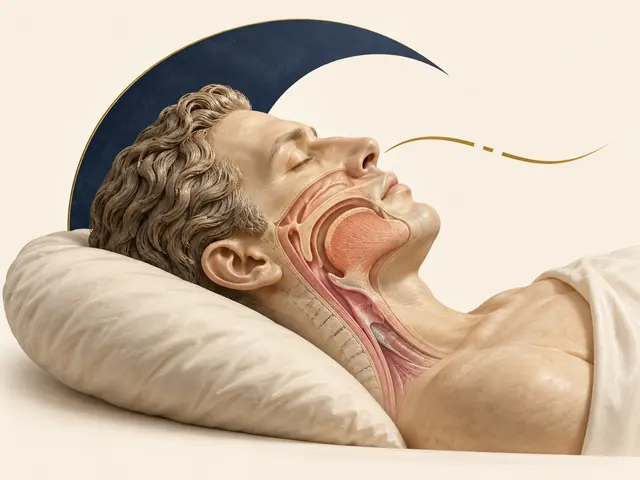
Sleep apnea is when you stop breathing repeatedly during sleep, which can be caused by blocked airways (obstructive), brain signals not working right (central), or both (mixed). The VA rates sleep apnea from 0% to 100% based on how severe your symptoms are and what treatment you need. Most veterans with sleep apnea get rated at 50% because they need a CPAP machine, while 100% is reserved for the most severe cases requiring a tracheostomy (breathing tube in your throat) or causing heart failure.
Symptoms Recorded in Granted Sleep Apnea Decisions
We analyzed 12,209 granted Board decisions involving sleep apnea for symptoms named in sentences about the condition (rating-criteria recitations excluded). Descriptive of the published record, what the Board wrote down, not a checklist of what to report.
VA's rule for DC 6847, word for word
Persistent day-time hypersomnolence
Sleep Apnea Syndromes (Obstructive, Central, Mixed)
VA's words that name a symptom charted below. Every level is in Rating Levels above, under the "Official VA criteria" tab.
Bar length shows decisions. Percentages remain context.
A small blue tag means VA's sentence names the same symptom, in the same word or its medical word. The bars count any mention of the symptom, at any severity, even to say it was absent. VA's sentence has its own conditions. A tag does not show that any rating level was met, and a symptom with no tag can still matter.
VA's words are today's rule (38 CFR 4.97, last amended December 14, 2016). The bars cover decisions from 1992 to 2026, decided under the wording of their time, which may have named different symptoms.
These bars count whole decisions whose overall result was granted. The At the Board box on this page counts each appealed issue, so its granted number is larger.
Detected by phrase-reading the decision text with condition-specific vocabularies. Source: Board of Veterans' Appeals decisions, RateMyVSO analysis.
Explore Sleep Apnea Resources
Pick a group to see its pages. Everything here is a link to another page on this site.
Start Here (1 page)
Ratings and C&P Exams (2 pages)
Claimed Secondary to Something Else (8 pages)
- Sleep Apnea Secondary to PTSDHow the Board has handled this pairing.
- Sleep Apnea Secondary to DiabetesHow the Board has handled this pairing.
- Sleep Apnea Secondary to TinnitusHow the Board has handled this pairing.
- Sleep Apnea Secondary to DepressionHow the Board has handled this pairing.
- Sleep Apnea Secondary to AnxietyHow the Board has handled this pairing.
- Sleep Apnea Secondary to AsthmaHow the Board has handled this pairing.
- Sleep Apnea Secondary to Chronic SinusitisHow the Board has handled this pairing.
- Sleep Apnea Secondary to TBIHow the Board has handled this pairing.
What Veterans Claim Alongside It (8 pages)
- VA PTSD Claims GuideHow VA decides a PTSD claim, start to finish.
- VA Migraine Claims GuideThe full guide to claiming migraines.
- VA TBI Claims GuideThe full guide to claiming head-injury residuals.
- VA GERD Claims GuideThe full guide to claiming acid reflux.
- VA Asthma Claims GuideThe full guide to claiming asthma.
- Migraines Secondary to Sleep ApneaHow the Board has handled this pairing.
- Hypertension Secondary to Sleep ApneaHow the Board has handled this pairing.
- Type 2 Diabetes Secondary to Sleep ApneaHow the Board has handled this pairing.
Evidence and Proof (4 pages)
- Secondary Claim GuideHow a condition caused by another rated condition is claimed.
- VA Causation Chains GuideHow one service-connected condition can lead to another.
- Private Medical Records for a VA ClaimGetting your own doctor’s records in front of the rater.
- Buddy StatementsLay statements, and what makes one carry weight.
Disclaimer: This tool is for informational purposes only and is not legal or medical advice. Always consult with your VSO representative or a VA-accredited attorney for guidance on your specific claim.